
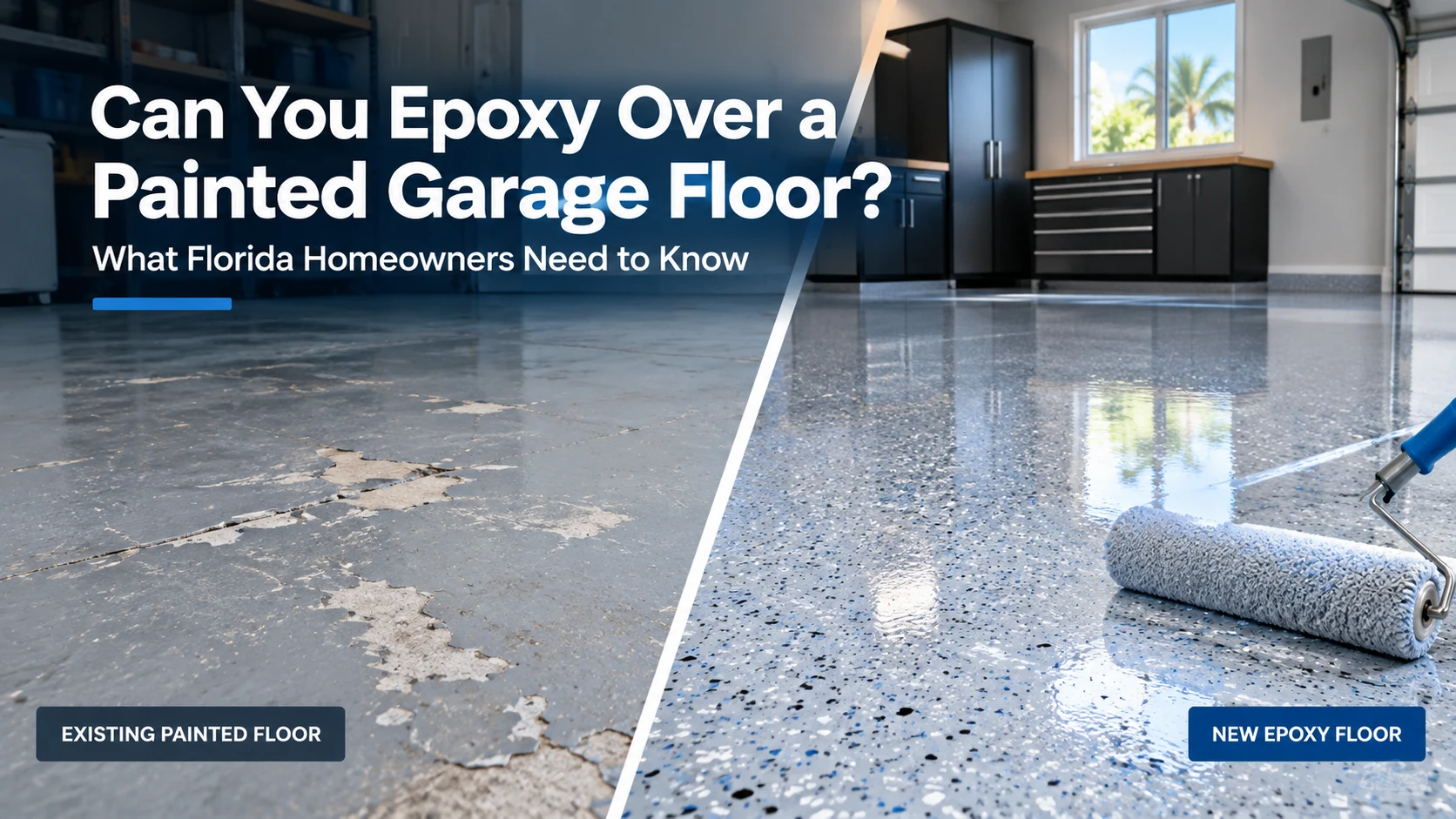
Can You Epoxy Over a Painted Garage Floor? What Florida Homeowners Need to Know
If your garage floor has already been painted, you may be wondering whether you can install epoxy directly over the existing paint.
The short answer is: sometimes, but applying epoxy directly over old garage floor paint is not always the right approach.
The condition, adhesion, type of existing coating, moisture levels, and concrete underneath all need to be evaluated before deciding how to prepare the floor.
For Florida homeowners, proper preparation is especially important because humidity and moisture can create problems for floor coatings if they are not addressed before installation.
In this guide, we'll explain whether epoxy can be installed over a painted garage floor, when existing paint needs to be removed, why surface preparation matters, and what homeowners in Titusville and Brevard County should know before investing in a new epoxy floor.
Can You Epoxy Over a Painted Garage Floor?
In some situations, a new coating may be compatible with an existing coating, but you should not assume that epoxy can simply be rolled over any painted garage floor.
The biggest concern is adhesion.
An epoxy system needs a sound, properly prepared surface underneath it. If the existing paint is poorly bonded to the concrete, putting epoxy over it doesn't solve the underlying problem.
If the old paint eventually peels away from the concrete, the new epoxy coating can fail with it.
That is why an existing painted garage floor should be evaluated before deciding whether the paint can remain or needs to be removed.
Why Does Existing Garage Floor Paint Matter?
Concrete and painted concrete are two very different surfaces when it comes to installing an epoxy system.
When epoxy is installed over properly prepared concrete, the surface can be mechanically profiled to create the texture needed for the coating system to bond.
When old paint is already covering the concrete, the new system is potentially relying on the old paint's bond to the slab.
That creates an important question:
Is the existing paint actually bonded well enough to serve as the base for another coating?
If the answer is no, adding epoxy over it can simply hide the problem temporarily rather than fixing it.
How to Tell if Old Garage Floor Paint Is Failing
Before considering a new coating, look closely at the existing paint.
Signs that the old coating may not be a suitable base include:
- Peeling or flaking paint
- Bubbling or blistering
- Loose edges
- Areas where the coating is already separating
- Cracking within the existing coating
- Worn-through areas exposing concrete
- Previous coating failures
- Moisture-related staining or damage
If the existing coating is already failing, applying another coating over it generally doesn't address the reason it failed in the first place.
Why Epoxy Should Not Simply Be Applied Over Peeling Paint
Think of your garage floor as a series of layers.
If the epoxy bonds strongly to old paint but the old paint has a weak bond to the concrete, the weak layer is still underneath the system.
That means the epoxy can only perform as well as the surface it is attached to.
This is one reason professional epoxy installers spend so much time on surface preparation before applying the actual coating.
Removing an incompatible or failing coating can provide a much more reliable foundation for the new floor system.
Does Old Garage Floor Paint Need to Be Removed Before Epoxy?
Not every painted floor will require exactly the same preparation.
The existing coating should be evaluated to determine whether it is compatible, properly bonded, and capable of supporting the planned epoxy system.
In many cases, removing an existing coating is the better approach because it allows the concrete underneath to be properly inspected and mechanically prepared.
This can also expose problems that may have been hidden beneath the old paint, such as:
- Concrete cracks
- Spalling
- Oil contamination
- Moisture issues
- Previous coating failures
- Surface deterioration
How Is Old Garage Floor Paint Removed?
One of the most effective professional methods for preparing concrete is diamond grinding.
Mechanical grinding can remove old coatings while also creating the surface profile needed for a new coating system.
This is very different from simply pressure washing the floor or lightly sanding a few areas.
The goal is to create a properly prepared surface across the entire coating area.
Why Mechanical Grinding Matters
Mechanical grinding can help remove old coatings, contaminants, and weak surface material while creating a more appropriate surface for the new coating system.
At Rivers Edge Painting, our epoxy flooring process uses diamond grinding and mechanical profiling as part of the preparation process.
Learn more about our epoxy flooring services and how we prepare concrete before coating.
What About Garage Floor Paint That Still Looks Good?
This is where professional evaluation becomes important.
An old garage floor can look perfectly fine while still having adhesion, contamination, or moisture problems that aren't obvious from appearance alone.
A floor that looks clean and intact should still be evaluated before deciding whether an existing coating can remain.
The type of paint, how it was originally installed, how well it is bonded, the condition of the concrete, and the requirements of the new coating system all matter.
In other words, appearance alone isn't enough to determine whether a painted garage floor is ready for epoxy.
What Happens If You Epoxy Over a Bad Paint Layer?
If the existing paint is poorly bonded, the new coating may eventually experience problems such as:
- Peeling
- Delamination
- Flaking
- Blistering
- Premature wear
Once multiple coating layers begin failing, correcting the problem can become more difficult and expensive.
Instead of simply installing another layer, the failed coatings may need to be removed so the concrete can be properly prepared.
That's why getting the preparation right before installation can be more cost-effective than trying to save time with a shortcut.
What If the Garage Floor Has Cracks?
Existing cracks don't necessarily mean your garage floor is unsuitable for epoxy.
However, cracks should be evaluated and repaired as part of the preparation process when appropriate.
Epoxy is a floor coating, not a structural repair system. If the concrete has significant movement or an underlying structural problem, that issue needs to be addressed separately.
For more information, read our guide on putting epoxy flooring over cracked concrete.
What About Oil Stains on a Painted Garage Floor?
Garages commonly have oil, grease, automotive fluids, dirt, and other contaminants on the concrete.
These contaminants can create additional challenges for coating adhesion.
Simply painting or coating over contaminated areas doesn't eliminate the contamination underneath.
A professional epoxy installation should evaluate the floor for oil and other contaminants and determine what remediation is necessary before coating.
Rivers Edge Painting specifically evaluates oil contamination, moisture, existing sealers, and previous coatings as part of its epoxy preparation process.
Why Moisture Matters for Epoxy Flooring in Florida
Moisture is one of the most important considerations when installing a floor coating over concrete.
Florida's warm, humid climate can make moisture management especially important for garage floors.
If moisture is moving through the concrete and the coating system isn't appropriate for the conditions, problems can develop after installation.
That's why a professional epoxy contractor should consider the condition of the slab and moisture conditions before choosing the coating system.
Rivers Edge Painting's epoxy process includes moisture assessment before installation so potential problems can be identified before the floor is coated.
Can You Epoxy Over a Painted Garage Floor Yourself?
DIY epoxy kits are widely available, but painted concrete presents an additional challenge compared with coating bare, properly prepared concrete.
A homeowner may be able to install a coating successfully, but the difficult part is often not rolling out the epoxy.
The difficult part is determining:
- What is already on the floor
- Whether the existing coating is properly bonded
- Whether the coating needs to be removed
- How the concrete should be mechanically prepared
- Whether oil contamination is present
- Whether moisture could affect the coating
- Which coating system is appropriate
If the preparation is wrong, even a high-quality epoxy product can fail.
What Does Professional Epoxy Garage Floor Preparation Include?
Every floor is different, but a professional installation may involve several preparation steps.
1. Inspect the Existing Floor
The floor should be evaluated for existing coatings, cracks, spalling, contamination, moisture, and other conditions that could affect the installation.
2. Remove Incompatible Coatings
If the existing paint or coating is not suitable for the new system, it may need to be removed.
3. Mechanically Profile the Concrete
Diamond grinding can create the appropriate surface profile for the new coating system while removing unwanted surface material.
4. Repair Cracks and Surface Damage
Appropriate cracks, spalls, and other surface defects should be addressed before the coating system is installed.
5. Address Oil and Other Contamination
Oil and other contaminants may require additional cleaning or remediation before coating.
6. Evaluate Moisture
Moisture conditions should be considered before the coating system is selected and installed.
7. Install the Coating System
Once the concrete is properly prepared, the appropriate primer, base coat, decorative flake or color system, and clear topcoat can be installed according to the requirements of the system.
How Much Does It Cost to Epoxy a Painted Garage Floor?
The cost depends on the size and condition of the garage, the existing coating, preparation requirements, repairs, moisture conditions, and the type of epoxy system selected.
A painted floor that requires extensive coating removal and repair can require more preparation than a clean, sound concrete slab.
That means the cheapest-looking estimate isn't necessarily the best value if it doesn't include the preparation your floor actually needs.
For a detailed breakdown of the factors that affect epoxy pricing in the area, read our Epoxy Flooring Cost Guide for Titusville.
Is Epoxy Worth It for a Florida Garage?
For many homeowners, epoxy flooring can be a worthwhile garage upgrade because it creates a durable, easier-to-clean surface and can dramatically improve the appearance of an unfinished or worn concrete floor.
However, the quality of the installation matters.
Our guide on whether epoxy flooring is worth it for Brevard County homes goes into more detail about the advantages, drawbacks, durability, and long-term value of epoxy flooring.
How Long Does an Epoxy Garage Floor Take to Install?
Professional garage epoxy projects typically take several days from preparation through usable cure time.
The exact timeline depends on the condition of the floor, repairs, coating system, temperature, humidity, and required cure windows.
A typical project may involve:
- Floor assessment
- Grinding and preparation
- Repairs
- Primer or base coat
- Color or decorative flake
- Clear protective topcoat
- Curing
Rivers Edge Painting provides return-to-service guidance for each project so homeowners know when foot and vehicle traffic can safely resume.
For more information about epoxy durability in Florida, read How Long Do Epoxy Floors Last in Florida?.
Signs You Should Have Your Painted Garage Floor Professionally Evaluated
Consider having your floor evaluated before installing epoxy if you notice:
- Peeling paint
- Flaking or bubbling
- Multiple old coating layers
- Large oil stains
- Cracks or spalling
- White or chalky deposits
- Persistent damp areas
- Previous coating failures
Even if the floor doesn't show obvious problems, professional evaluation can help determine the appropriate preparation before you invest in a new coating system.
Epoxy Garage Floors in Titusville and Brevard County
Rivers Edge Painting installs epoxy flooring systems for residential garages and commercial spaces throughout Titusville and Brevard County.
Our service areas include Titusville, Mims, Port St. John, Cocoa, Merritt Island, Cape Canaveral, and surrounding Brevard County communities.
Our epoxy process focuses on the preparation that happens before the coating is installed, including:
- Diamond grinding and mechanical profiling
- Crack and spall repair
- Oil contamination assessment
- Moisture assessment
- Existing coating evaluation and removal when needed
- Multi-layer coating systems
- Decorative flake or solid-color finishes
- Durable clear topcoats
Learn more about our epoxy flooring services.
Frequently Asked Questions
Can you put epoxy over a painted garage floor?
It depends on the existing coating and its condition. The paint needs to be evaluated for adhesion, compatibility, and condition before determining whether it can remain. In many cases, removing an incompatible or failing coating and properly preparing the concrete is the better approach.
Does epoxy stick to painted concrete?
Epoxy can potentially bond to certain existing coatings when the surface is properly evaluated and prepared, but epoxy should not simply be applied over unknown or poorly bonded paint. The condition of the existing coating is critical.
Does painted concrete need to be sanded before epoxy?
The required preparation depends on the existing coating and the epoxy system being installed. Professional mechanical preparation, such as diamond grinding, may be necessary to remove incompatible coatings and create the appropriate surface profile.
What happens if you epoxy over peeling paint?
If the existing paint is not properly bonded to the concrete, the epoxy may eventually peel or delaminate along with the underlying paint. The weak layer needs to be addressed before installing a new coating.
Can you epoxy over an old epoxy floor?
It depends on the condition and compatibility of the existing coating. The existing floor should be evaluated and properly prepared before another coating system is installed.
Will epoxy cover cracks in my garage floor?
Epoxy can cover properly repaired minor cracks in some situations, but epoxy is not a structural repair. Cracks should be evaluated and appropriately repaired before the coating is installed.
How long does an epoxy garage floor last?
A professionally installed epoxy floor can last many years when the concrete is properly prepared and the coating system is appropriate for the space. Florida's climate, traffic, maintenance, and installation quality can all affect the lifespan.
Get Your Painted Garage Floor Evaluated
If your garage already has an old painted floor, you don't necessarily have to start over with a completely new slab.
But before installing epoxy, it's important to know what you're working with.
Rivers Edge Painting can evaluate the existing coating, concrete condition, cracks, contamination, and moisture conditions to determine what preparation your garage floor needs.
Don't risk putting an expensive new coating over a surface that isn't ready for it.
Contact Rivers Edge Painting for a free epoxy flooring estimate in Titusville or throughout Brevard County.
Call (321) 291-1216 or request an estimate to find out whether your existing garage floor is a good candidate for a new epoxy system.